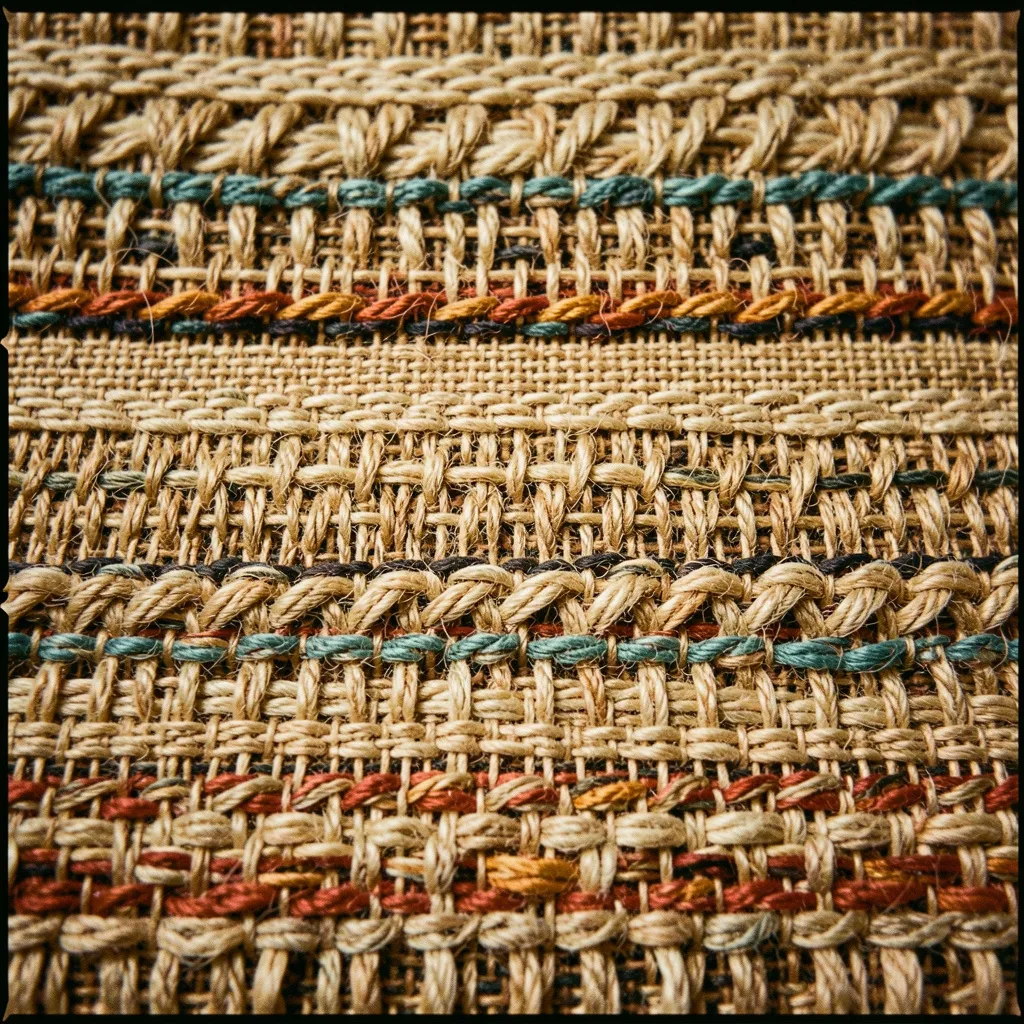
Understanding Drafts
A weaving draft is a technical diagram that specifies how warp and weft threads interlace to create a pattern. These documents serve as instructions for the weaver, detailing thread counts, color sequences, and structural relationships that determine the final textile's appearance and properties.
Draft Components
Threading Draft
The threading draft shows how warp threads are arranged through the heddles. This determines the basic structure and affects how the pattern will appear when woven. Each position in the draft corresponds to a specific warp thread and its placement in the loom setup.
Tie-Up
The tie-up connects the treadles to the shafts, defining which shafts are raised or lowered with each treadle press. This component controls the shed formation, allowing weft threads to pass through the warp in the correct sequence.
Treadling Sequence
The treadling sequence specifies the order in which treadles are pressed during weaving. This sequence, combined with the threading and tie-up, creates the final pattern structure. Variations in treadling can produce dramatically different results from the same threading.
Drawdown
The drawdown is a visual representation of how the completed pattern will look. It shows the interlacement of warp and weft threads, providing a preview of the textile's surface structure and helping to identify potential issues before weaving begins.
Pattern Categories
Geometric Patterns
These patterns are based on mathematical relationships and geometric shapes. They often feature repeating motifs that create visual rhythm and structure. Geometric patterns are particularly effective for creating textiles with strong visual impact and clear design intent.
Organic Motifs
Organic patterns incorporate flowing lines and natural forms. These designs often require more complex threading sequences but result in textiles with softer, more fluid visual characteristics. They are well-suited for decorative applications.
Structural Variations
Some patterns focus on creating specific structural properties rather than visual motifs. These include patterns designed for strength, flexibility, or texture. The technical requirements for these patterns often drive the design process.
Technical Specifications
Thread Count
Each pattern specifies the number of warp and weft threads per unit of measurement. This count affects the textile's density, drape, and overall appearance. Higher thread counts generally result in finer, more detailed patterns but require more time and material.
Color Planning
Patterns include color specifications that indicate which threads should be which colors. This planning is essential for achieving the intended visual effect. Color choices can dramatically alter a pattern's appearance even when the structural draft remains the same.
Repeat Structure
Most patterns are designed to repeat across the width and length of the textile. The repeat structure determines how the pattern tiles across the fabric surface. Understanding repeat relationships is crucial for creating seamless pattern continuity.
Archive Organization
Cataloging System
Our archive uses a systematic cataloging approach that organizes patterns by structure type, complexity level, and intended application. This system facilitates pattern selection and helps identify suitable designs for specific projects.
Documentation Standards
Each pattern in the archive includes complete documentation: technical drafts, material specifications, sample photographs, and notes on execution. This comprehensive documentation ensures patterns can be accurately reproduced.
Custom Development
While our archive contains many established patterns, we also develop custom drafts for specific projects. This process involves translating design concepts into technical specifications that can be executed on the loom.